No. Utah emergency rooms do not pull teeth or do root canals. They treat spreading infection, facial injuries and uncontrolled bleeding, and leave the tooth itself for a dentist to handle. In Salt Lake City, that dentist can be us: call (385) 480-0270 first and a same-day extraction time is held for you.
The short version is that a hospital and a dental office solve different problems. One handles the parts of a dental emergency that can threaten your health. The other handles the tooth. Knowing which is which, before the pain peaks at 2:00 AM, saves you a trip to the wrong place.
Why the emergency room doesn't extract teeth
An emergency department is staffed by physicians, nurses and physician assistants. Removing a tooth calls for a dental license, dental X-ray equipment, and the instruments and training that come with it. None of that is part of a hospital emergency department in Utah, so the staff there can't take the tooth out even when it's plainly the cause of your problem. The American Dental Association's patient site explains which situations count as dental emergencies and what to do in the moment at MouthHealthy: Dental Emergencies.
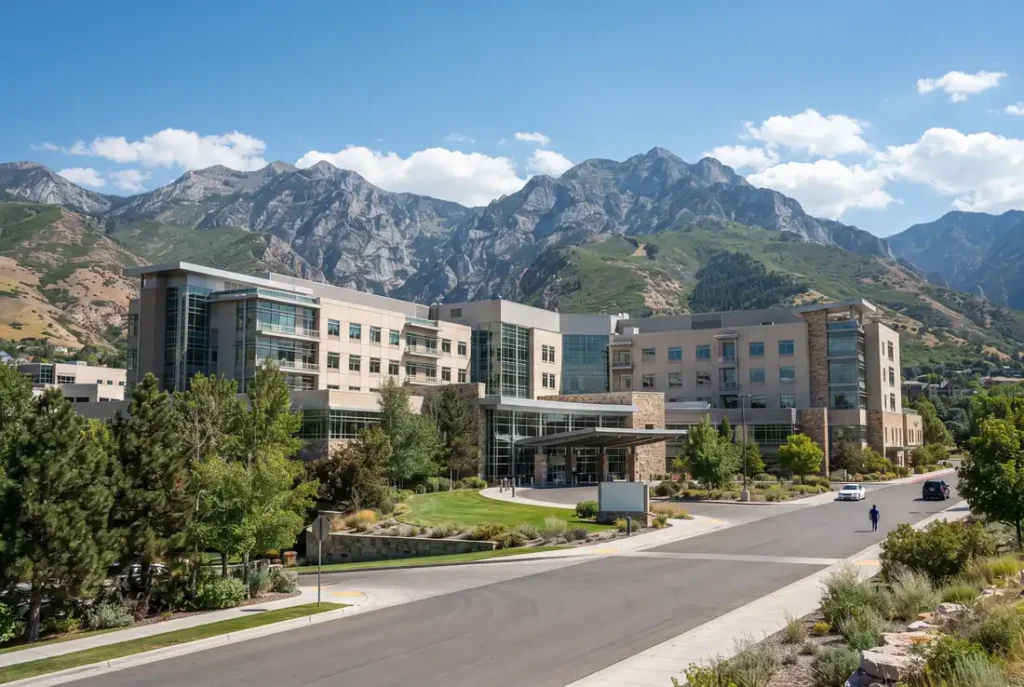
What they do handle is important. Utah emergency rooms treat spreading infection, facial injuries and uncontrolled bleeding: the swelling that's climbing toward the eye or creeping down the neck, the fall or the hit that may have broken the jaw, the bleeding that won't slow down. They generally don't treat the tooth itself. If you leave the ER with instructions to see a dentist, that's the system working as designed, not a brush-off.
When the ER is the right first stop
Some symptoms mean the problem has grown past the tooth, and those need a hospital before a dentist. Head for the nearest emergency room, or dial 911, for any of these:
- Swelling on the move: toward your eye, under your jaw, or down into your neck
- Trouble breathing or swallowing, or a feeling that your throat is closing
- A fever with facial swelling, or swelling that is making it hard to open your mouth
- Bleeding from the mouth that firm pressure hasn't slowed in 15 to 20 minutes
- Facial trauma where the jaw might be fractured or teeth are shoved out of line
- A knocked-out tooth along with a head injury, confusion or loss of consciousness
Near our office, the two closest emergency rooms are Intermountain Medical Center on State Street at 5300 South and St. Mark's Hospital on 1200 East near 3900 South. The warning signs of a tooth abscess that has begun to spread are listed by Mayo Clinic at Mayo Clinic: Tooth abscess.
Once the ER has handled the dangerous part, the tooth still needs attention. The infection usually comes back if the source isn't removed or treated, so the dental visit is a second step, not an optional one.
When a same-day dentist is the right first stop
For most tooth problems, it's the dental office, not the hospital, that actually fixes the problem. A cracked molar, a tooth that broke off at the gum, a wisdom tooth that keeps flaring, an abscess that's painful but hasn't spread, a tooth so decayed it can't be rebuilt: all of these are extraction or root canal cases, and all of them are handled at our 4500 South office in the Murray area.
The process is the same each time. You call first, because we don't take walk-ins, and it's the phone call that puts a chair and a dentist on reserve for you. At the visit, a dentist looks the tooth over, takes an X-ray, explains the diagnosis, and puts a price for the treatment in writing. If extraction is the right answer and your health history allows it, the tooth can often come out at that same appointment. Both simple and surgical extractions happen in-house; the details are on our emergency tooth extraction page.
If the tooth can be saved, the dentist will say so. Many patients expect to lose a tooth that a root canal can keep, and that conversation happens before any decision is made.
What to do while you wait for your appointment
Pain management between the call and the chair is mostly about not making things worse.
Step one is an over-the-counter pain reliever, dosed per its label. A cold compress on the cheek, 15 to 20 minutes on and then a break, is step two. Rinse gently with warm salt water. Avoid chewing on that side, skip very hot or very cold drinks, and don't put aspirin against the gum, which can burn the tissue. The same steps are covered on Mayo Clinic's first-aid page at Toothache first aid at Mayo Clinic.
If the pain changes character, especially if swelling appears or grows, that's the moment to reread the ER list above.
When to call a dentist today
A broken, loose or infected tooth, or one that's keeping you awake, with none of the ER warning signs present, is a reason to call (385) 480-0270. Our office holds same-day appointments Monday through Wednesday from 8:00 AM to 5:00 PM and Thursday from 8:00 AM to 12:00 PM. Outside those hours a real person still picks up, logs what's wrong and keeps the next office morning's first opening for you.
No insurance? Then $99 is what the exam and X-ray cost, and the visit starts there.
The $99 emergency exam fee is for patients paying without insurance. It covers a limited, problem-focused emergency exam and the X-ray needed to diagnose the tooth. Treatment is priced separately and quoted to you in writing before any work starts.
Frequently asked questions
Do I still need a dentist after an ER visit for a tooth?
Yes. The hospital dealt with the spreading infection or the injury, but the tooth behind it is still in your mouth when you leave. An abscess usually comes back if its source isn't removed or treated, so plan on a dental visit within days. Bring any paperwork the ER gave you so our dentists know what was done.
Can urgent care pull a tooth in Utah?
No. Taking out a tooth needs a dental license, a dental X-ray and dental instruments, whether the building is a hospital emergency department or an urgent care clinic. The fix for the tooth itself comes from a dentist, so calling a dental office first skips an extra stop.
What if my tooth problem starts on a weekend?
Our office is closed Friday, Saturday and Sunday, and the phone is answered anyway. A real person writes down who's calling, how to reach you and what hurts, and Monday's 8:00 AM opening is yours. If any ER warning sign shows up over the weekend, swelling toward the eye or neck, trouble breathing or swallowing, or bleeding that won't stop, head for the hospital first; our office is the follow-up.
This article is for general education and is not a substitute for an exam by a licensed dentist.